

To be honest, I didn’t really intend to visit Ukraine at first. I never spoke Ukrainian or Russian either: I didn’t even know how to say “hello.” In addition, I had almost no knowledge about the country before the full-scale war unlike the Middle East: all I knew about Ukraine was its capital city was “Kiev,” not even Kyiv. And precisely, I didn’t have time to visit there: I was too busy for my work at television news. Thus, it was surprise for me to buy a flight ticket to Poland; it was like something automated. My instinct was stronger than my sanity which was so weak enough to leave my job.
After 17-hour trip from Warsaw via bus, I found myself in Kyiv. The capital city seemed as normal as Warsaw — it was just beautiful city with abundant amount of people, cars and shops. Domestic tourists with Ukrainian flags take pictures in front of independence monument. Coffee stands provide stylish cups of drinks. Street vendors sell various souvenirs with blue and yellow colours. Young ladies are smoking hookah at bars. What I saw for the first time in Kyiv was like that.
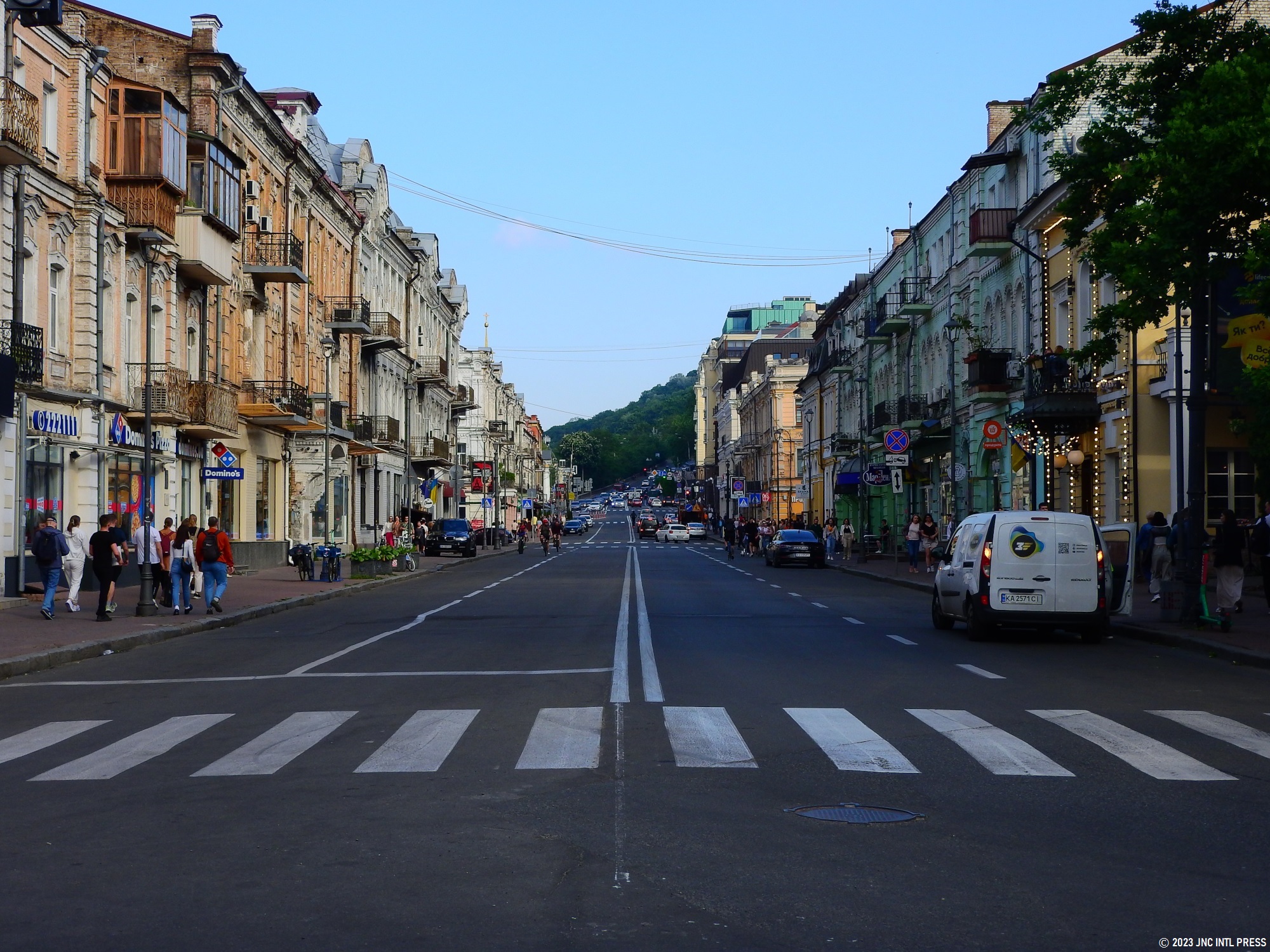
The city looked like almost normal for a warring nation. You could hardly distinguish Ukraine from other Slav countries from anything, especially when you are in the rural area. There were golden-shining orthodox churches, grasslands merging into the sky on the horizon, and ibises’ nests on artificial platforms for conservation. It doesn’t mean I doubt the news, but I didn’t really feel the reality of war. In fact, many buildings which were destroyed by Russian shelling have been recovered or are under re-construction. Some buildings are brought down and cleared to set up completely new ones while others are being reformed. This is the biggest difference from those in the Middle Eastern warring countries, where only rubbles remains at the aftermath of bombing for some or more than ten years. Therefore, the war in Ukraine is relatively invisible in the central city compared to the ones in the Middle East.
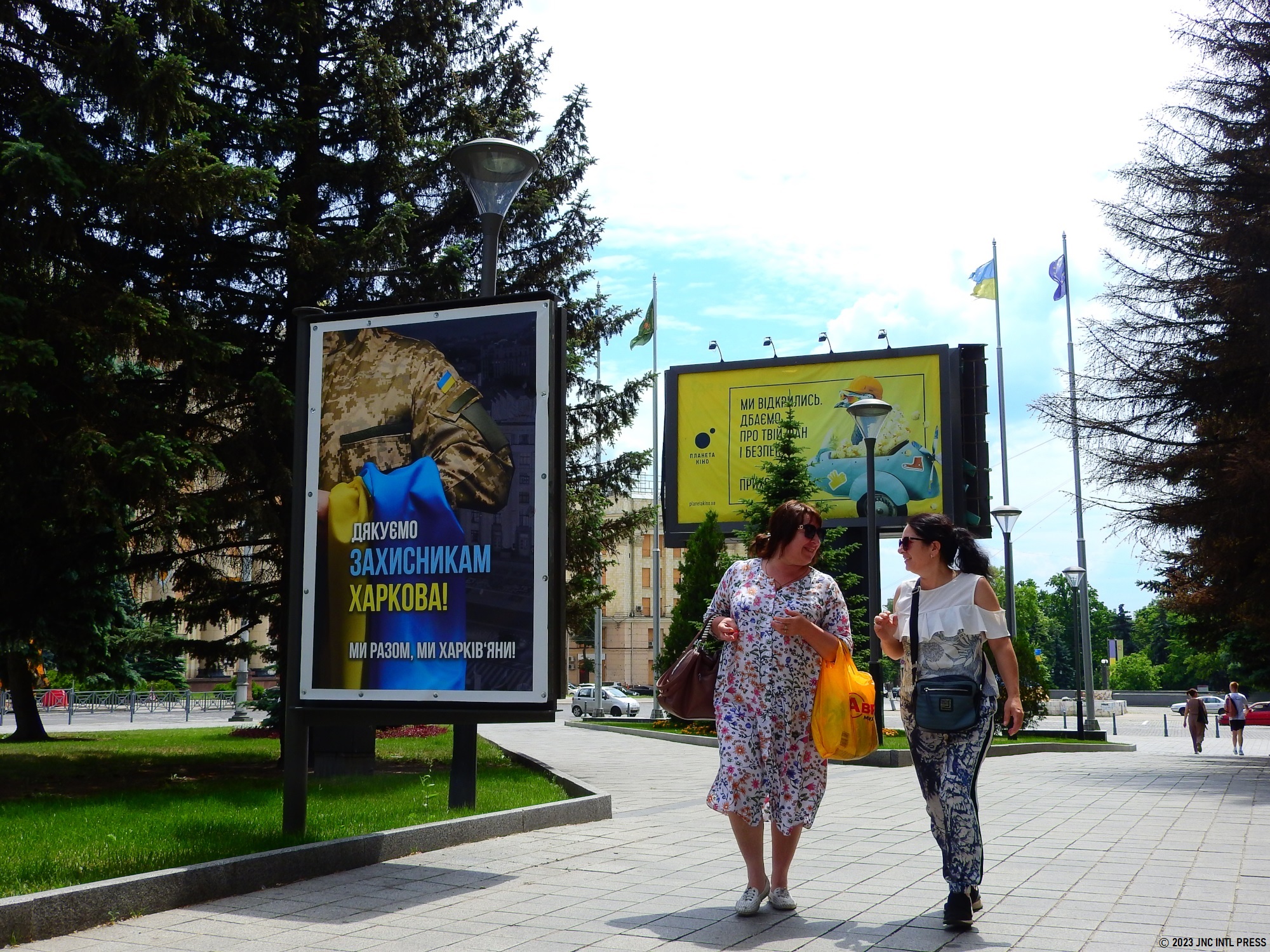
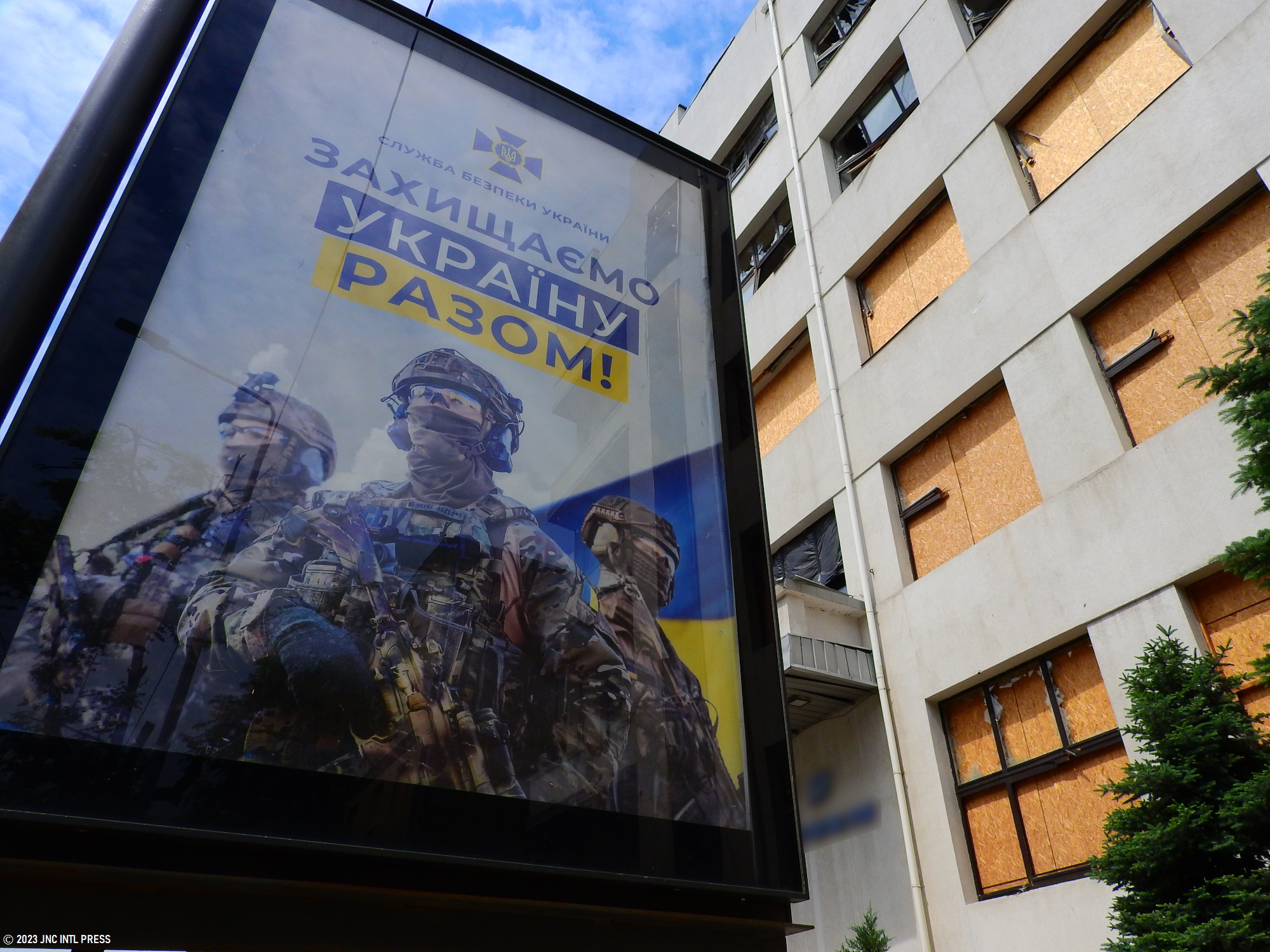
The first thing you would smell something of war may be ads around the city. A lot of ads standing by roads are somewhat, or directly related to the war, such as the one appealing for disability inclusion (Fight for the freedom of the country and the challenged), calling for non-smoking (Health care is your contribution to the victory), and simply praising the Armed Forces of Ukraine. So basically, you would think you could spend nice time here as a tourist—except air alert sirens. The very first siren I heard was when I checked in a hotel. My cell phone rang like the end of the world and said: “Attention, air raid alert. Proceed to the nearest shelter. Don’t be careless, your over-confidence is your weakness.” Most Russian missiles and suicide drones were shot down by Ukrainian air defence, but some were wounded and one person was killed at the night in Odessa.
It is sort of strange, however, that most people don’t rush into shelters like they used to do when an air raid siren screams. Aren’t they scared anymore? It is half true, half false. It has been more than 470 days since Russia started this full-scale war; Ukrainian people indeed have got used to it and regarded the air raid sirens as a part of life. You cannot stand it when you are interfered five or ten times a day, whatever you are going to do. Therefore, people now tend to do whatever they want during air alerts—ride a metro, drive a car, enjoy shopping, and chat with your friends on the bench. Officially speaking, it is strongly advised for citizens to evacuate themselves from outside to bomb shelters when the air alert sirens ring. Some people, of course, immediately close their stores and go to the shelters; meanwhile, to be honest, quite a few people remain outside and continue doing what they have been doing. At this moment, air raid is just like a traffic accident for them: it is scary indeed, but you won’t stop driving a car anyway.
This might sound like “when I die, I die.” But this mindset is not an infantrymen-like mentality with resignation; they have concrete grounds that they can live in “peace,” contrary to our expectations. The reason is simple—Ukrainian military personnel and equipment at air defence system are actually reliable to believe in. As written above, most or all the Russian missiles and/or drones are shot down by Ukrainian air defence in most cases. The other day, I observed Ukrainian searching light and surface-to-air missiles flying towards Russian drones with my own eyes at a night. At first, I thought a Ukrainian jet fighter was flying at a super low altitude near me since the sound of jet was overwhelmingly big. However, I realised when I heard third noise that they were that of anti-aircraft missiles launched from surface, as I saw a sparkling tail burning in the night sky. Shortly after every sound of jets, an explosion followed. Knowing the explosion was the sign of successful interception, I felt relief each time. Thus, the actual chance to see the Russian rockets on your way is very low.
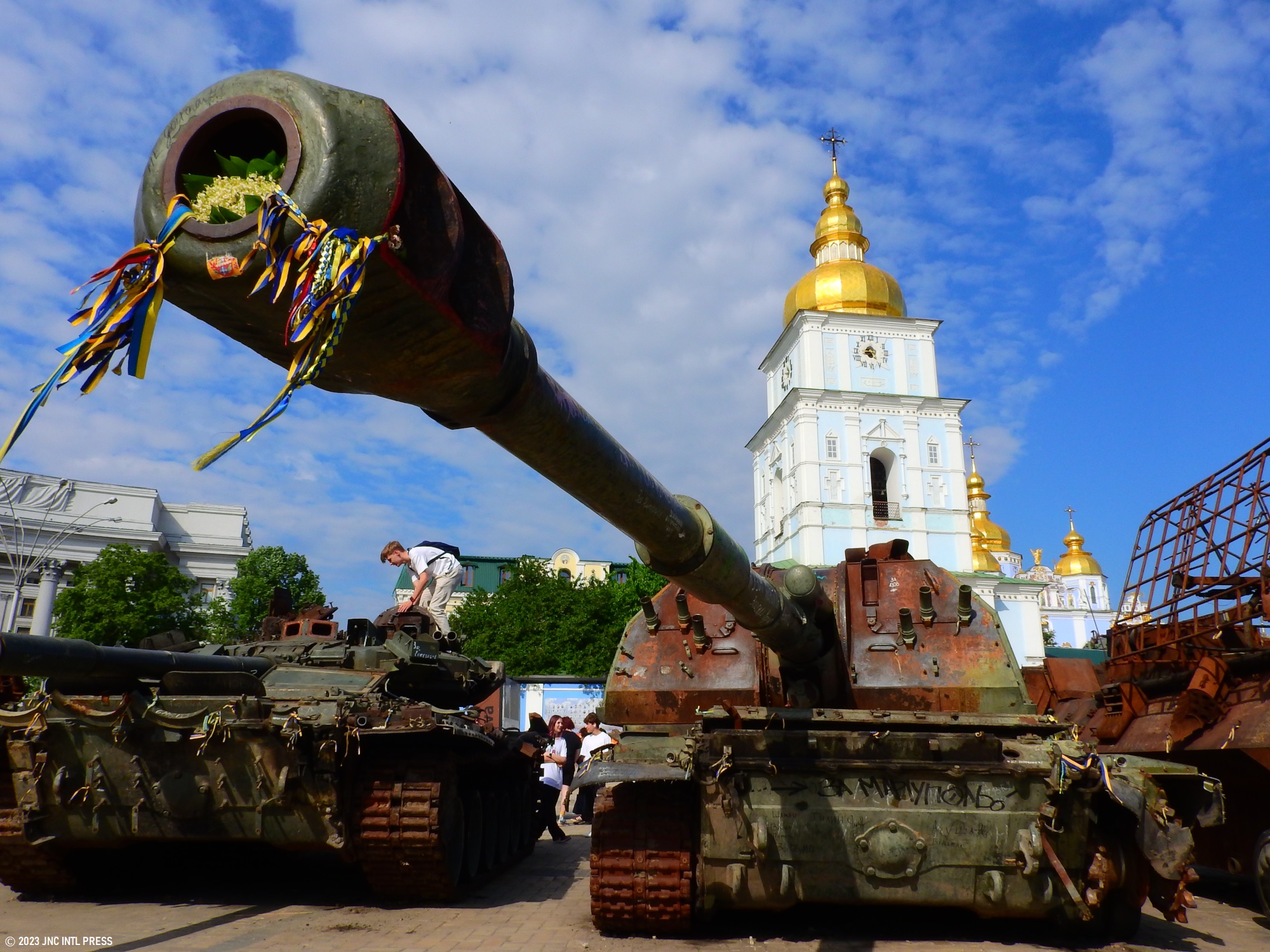
However, the number of weapons decreases when you use them, of course. Ukrainian military personnel have to be awake under extreme tension all night, of course. In April, it was said that Ukrainian Forces would run out of its air defence equipment in May. It didn’t happen thanks to the Western aid after all, but the shortage in weapons has never been solved even now. Putin wants to reduce Ukrainian resources little by little, day by day. In addition, damage for human resources is also worth consideration. While quite a few Ukrainians are not very sensitive to the sirens, some surely hate hearing them and suffer from nerves. It’s also a daily routine to hear the sirens after the midnight, therefore some people complain of sleep deprivation. Moreover, the pressures felt by the personnel at air defence system are beyond our imagination. When they fail, people die.
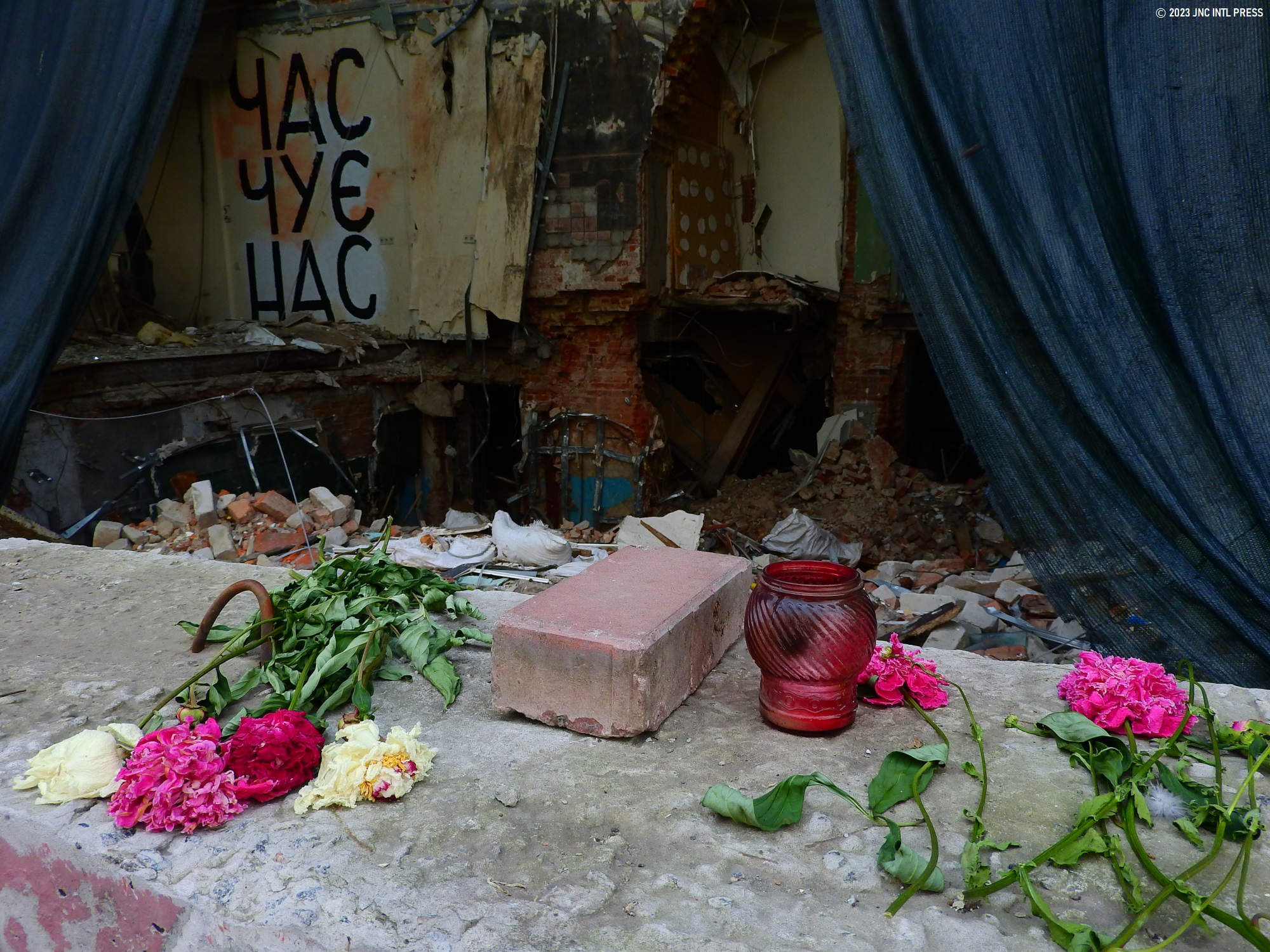
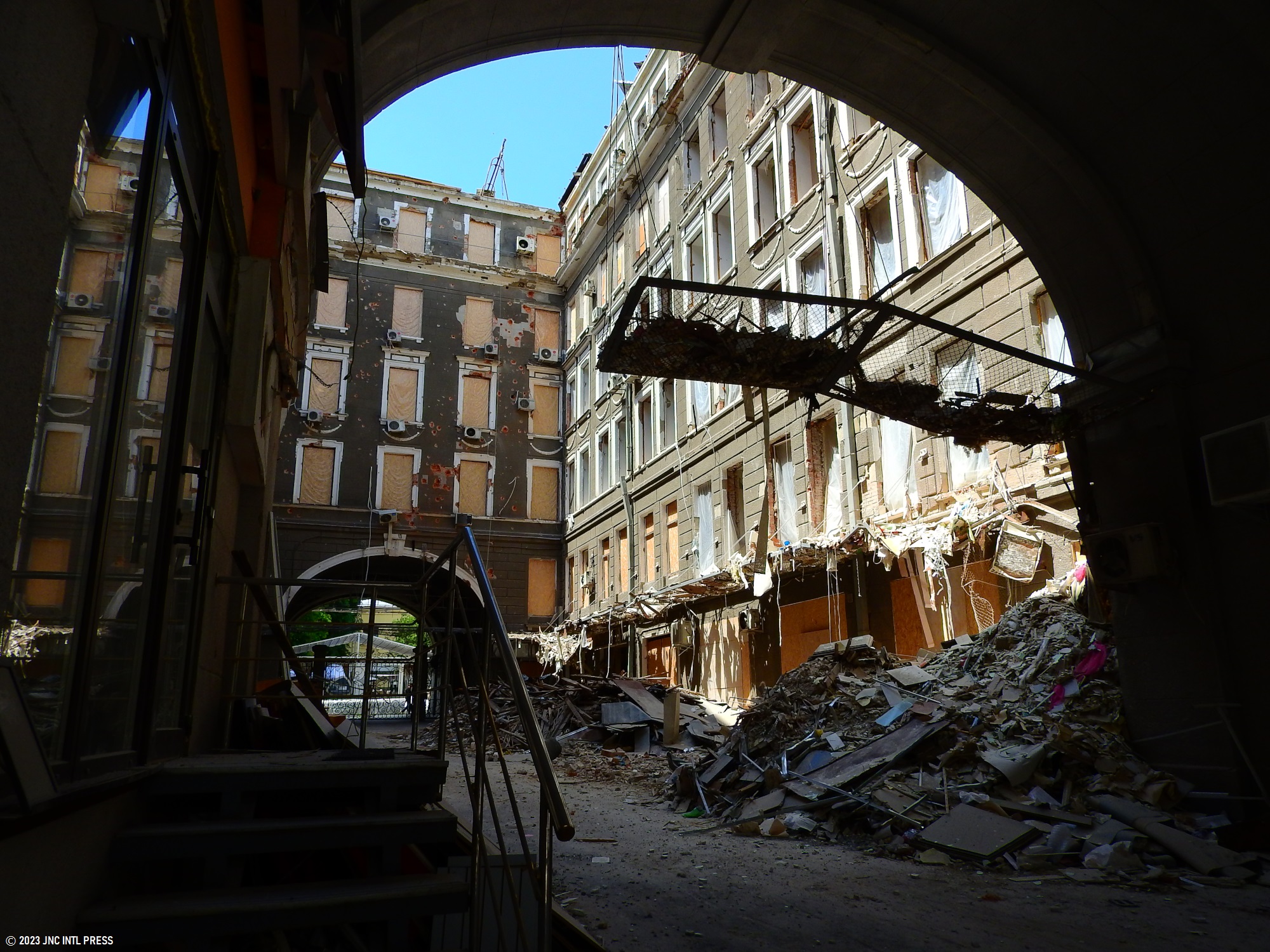
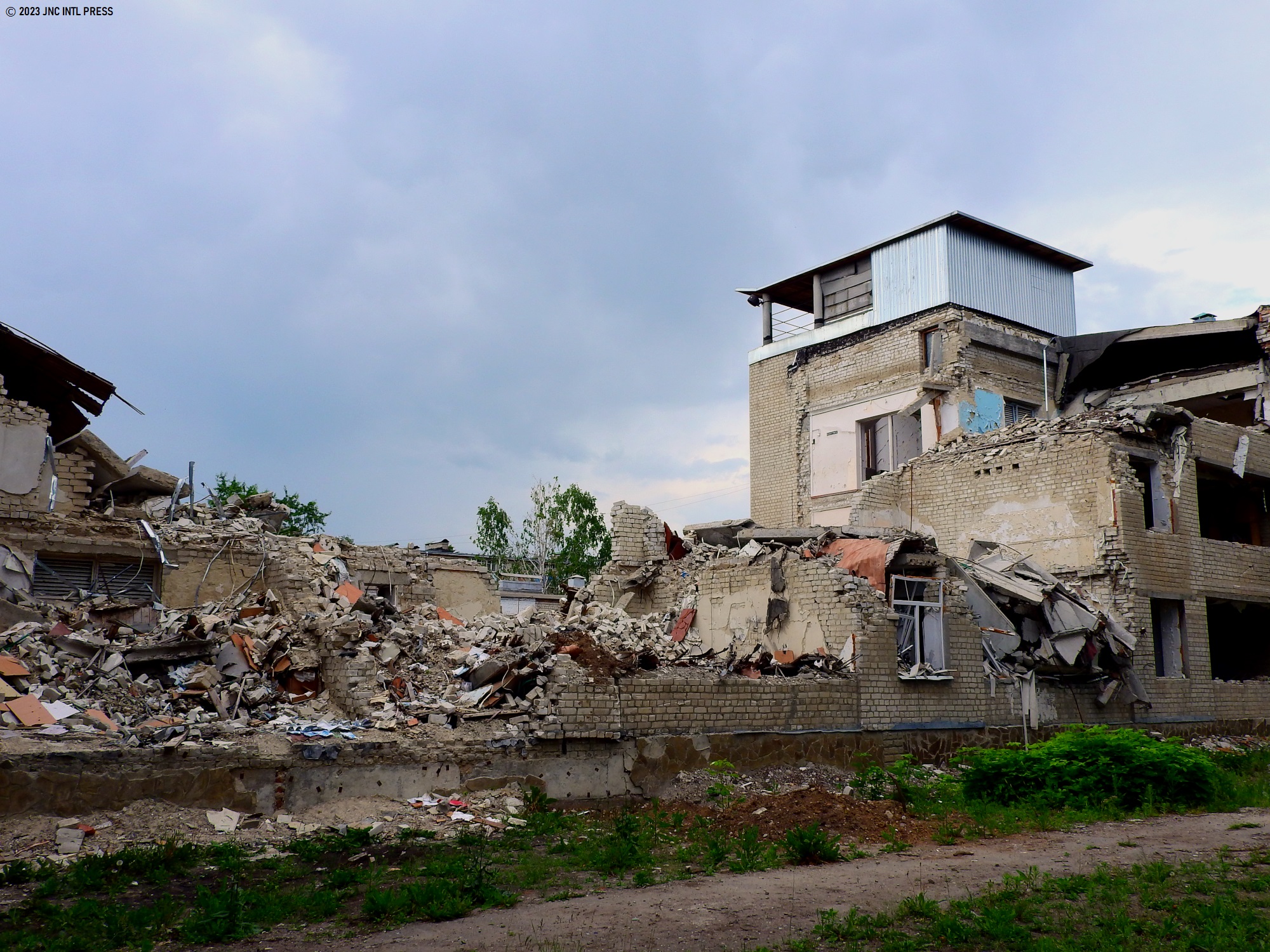
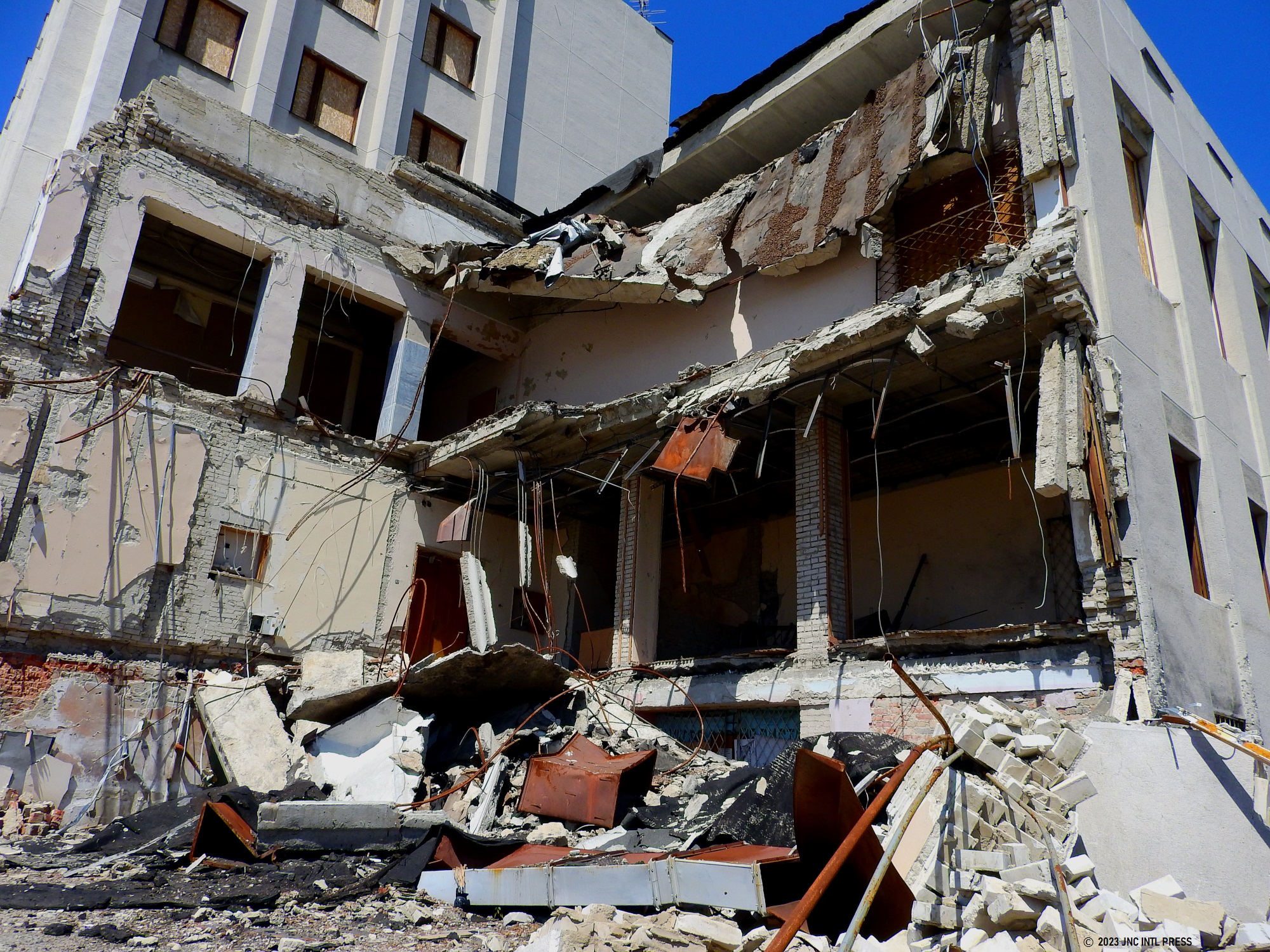
Believe me, the war is actually going on. I heard several explosions in Kyiv and Kharkiv shortly after the air raid sirens. The one in Kharkiv really frightened me; it was a huge explosion a few minutes after a loud one and even had an impact on my stomach. At first I even thought that the neighbour had started launching fireworks. And yes, after a few moment, I realised I was in the middle of war. We are under fire and Russian missiles are on their way to us. Originally, war is designed to be only for military personnel; it is not for citizens. But if you look at the reality, the war is greedy enough to involve the fellow citizens in participating in itself. When you walk around a relatively small road near the city centre in Kyiv, Dnipro and Kharkiv, you would find quite a few destroyed buildings and rubble around them in residential areas. Traffic has a congestion at every checkpoint run by ZSU; you cannot go out at night and no stores are open at night due to curfew. Also you would feel war by spotting a line of small foxholes alongside with the highway. The most common thing related to war in Ukraine would be “Czech hedgehogs” which are rolled all around the country.

“The forest is dangerous. You had better keep away from it and never go into it deeply,” a police officer who was on the watch for the park told me. In Kharkiv, landmines are still under the ground of a forest park. According to the officers, the mines were set by Russian Forces during the Russian occupation in 2022. There was a big sign saying “MINES” on the closed gate. Meanwhile, the park itself was a quiet and beautiful place—civilians were walking dogs, hiking and running there. In the meantime, there are some reports that vehicles run over explosives and people get killed or injured in de-occupied towns and villages. Some NGOs and NPOs are working on the demining tasks with all their efforts, but it takes a long time to clean the areas; it is very easy to bury a mine, but nevertheless, it is very difficult and troublesome to remove it. It may sound peculiar to see war and daily life at the same place and same time, but this is what war looks like here.

But look, Ukrainians are still standing. Basically, people have boosted their morale of the nation because of the counter-offensive by ZSU. Thus, Russian intent to bomb Ukrainian cities in such a frequency (approx. 5-10 times a day in each region) is clearly demotivating the fellow citizens. However, I have a bad news for Putin. There doesn’t seem much effectiveness of this strategy here; to tell the truth, on the contrary, Ukrainian nation strengthens their morale and patriotism thanks to Russian aggressions in 2014. Full-scale invasion in 2022 has made them even stronger.
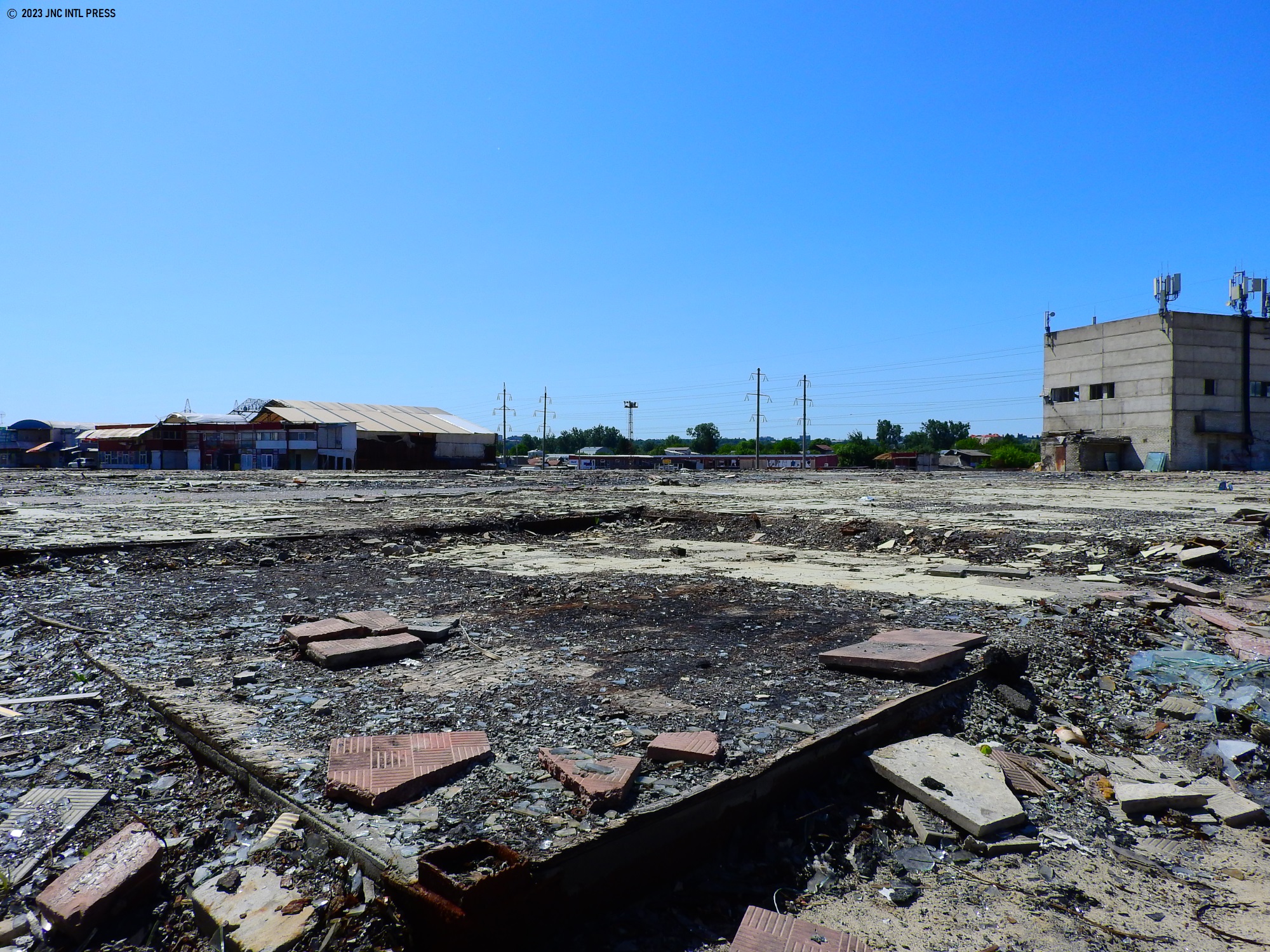
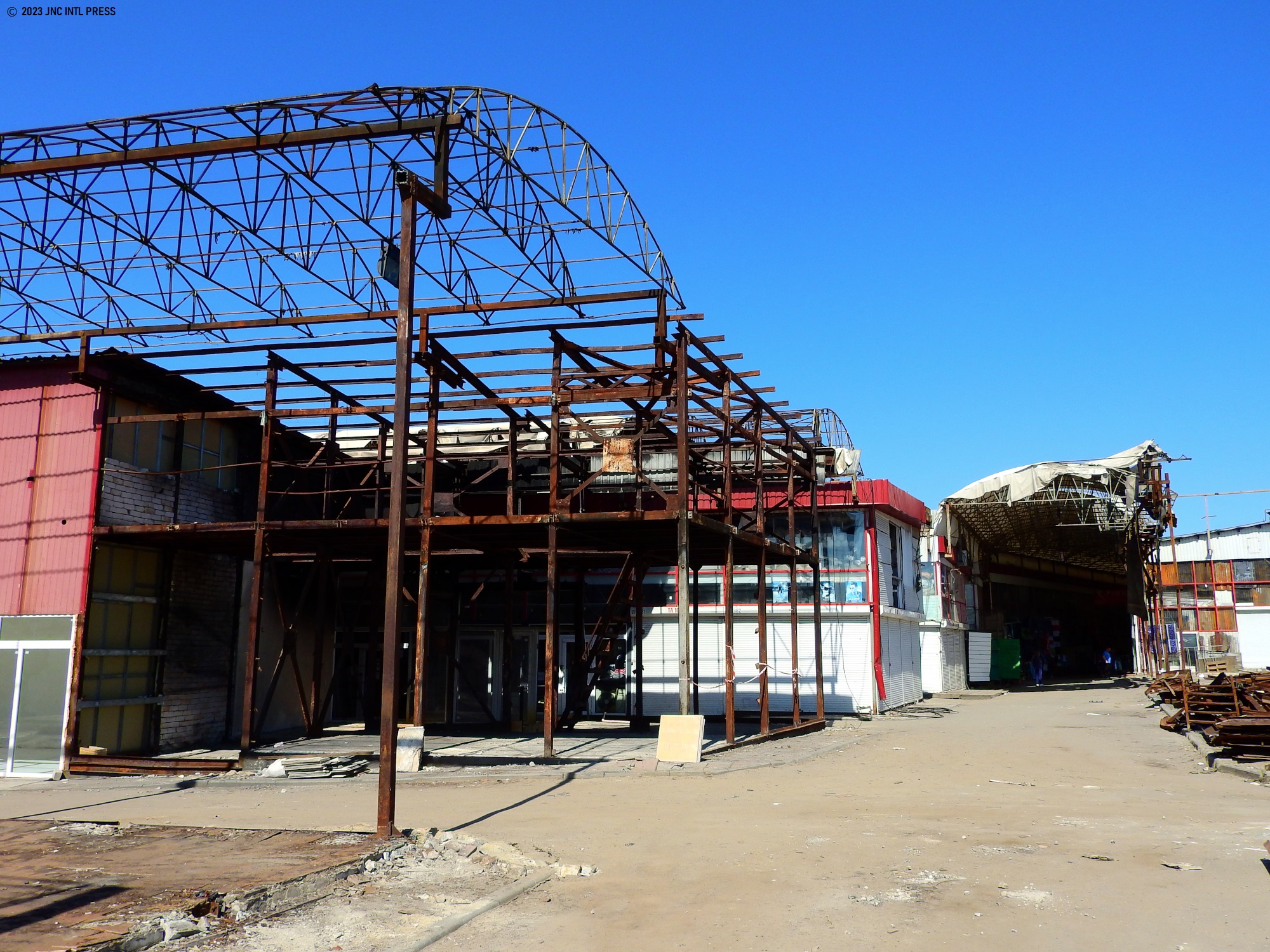
At the same time, however, Many Ukrainians get anxious and irritated with the war. A shop owner at the Barabashovo Market, one of the largest markets in the Eastern Europe and constantly shelled by Russian missiles, expressed his dissatisfaction. “Well, as you can see, this is how it looks like. Well, they [Ukrainian authorities] have helped us indeed, well, but how is it? There is nothing here. Well, you have to understand, well, that today we are attacked, tomorrow you could be attacked.” He looked nervous. The number of words “well,” showed his resentment against the war.
Although I wrote that there were few concern for actually getting hit by Russian missiles, I honestly feel the best relief when my cell phone says this: “Attention, the air alert is over. May the force be with you.”

 Journalism is Not a Crime